
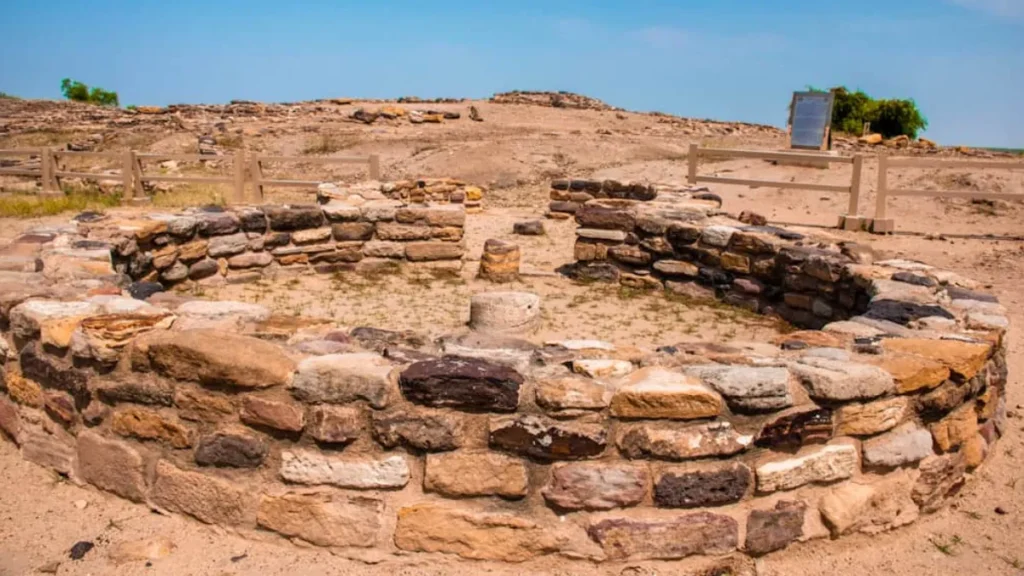
What is Dholavira famous for? Dholavira is famous for being one of the most remarkable and well-preserved ancient cities of the Indus Valley Civilization, known for its advanced urban planning, unique water conservation system, and rich archaeological discoveries.
Located in the Khadir Bet island of the Rann of Kutch, Dholavira offers a fascinating glimpse into a civilization that thrived over 4,500 years ago. Today, it stands as a UNESCO World Heritage Site and a symbol of India’s ancient engineering brilliance.
The Historical Importance of Dholavira
Dholavira is one of the five largest Harappan sites discovered in the Indian subcontinent. It belongs to the ancient Indus Valley Civilization, which flourished between 3000 BCE and 1500 BCE.
Unlike many other Harappan sites, Dholavira showcases a well-planned city with clear divisions, advanced infrastructure, and unique construction techniques. Archaeologists believe it was a major trade and cultural center during its time.
The site was discovered in 1967 by Indian archaeologist Jagat Pati Joshi, but extensive excavations began in the 1990s, revealing its true importance.
What is Dholavira Famous For in Architecture?
Advanced Urban Planning
One of the main reasons why Dholavira is famous is its highly organized city layout. The city was divided into three main parts:
The Citadel
The citadel was the most fortified and elevated part of the city. It likely housed rulers or elite members of society. The construction here used large stone blocks, which is unique compared to other Harappan cities that mainly used bricks.
The Middle Town
This area was designed for officials and skilled workers. It shows planned streets, drainage systems, and well-structured buildings.
The Lower Town
The lower town was where the general population lived. Even here, the planning was systematic, with organized streets and houses.
This structured layout shows that Dholavira had a strong administrative system and social organization.
Unique Use of Stone
Unlike other Harappan cities such as Harappa and Mohenjo-daro, Dholavira used stone extensively in construction. This makes it architecturally unique and more durable, which is why many structures are still visible today.
What is Dholavira Famous For in Water Management?
Exceptional Water Conservation System
Another major reason why Dholavira is famous is its advanced water management system. The city was built in a dry region, yet it developed one of the most sophisticated water conservation techniques of its time.
Reservoirs and Storage Systems
Dholavira had a series of interconnected reservoirs that collected rainwater and stored it for long periods. These reservoirs were built using stone masonry and were strategically placed around the city.
Rainwater Harvesting
The city had channels and drains designed to capture rainwater and direct it into storage tanks. This system ensured a continuous water supply even during dry seasons.
Dams and Water Channels
Archaeologists discovered evidence of dams built across nearby seasonal streams. These dams helped control water flow and stored water efficiently.
This level of planning proves that the people of Dholavira had deep knowledge of engineering and environmental management.
What is Dholavira Famous For in Archaeological Discoveries?
The Dholavira Signboard
One of the most fascinating discoveries at Dholavira is a large signboard with inscriptions in the undeciphered Indus script. This is considered one of the earliest examples of signage in human history.
The signboard was found near the northern gate of the city and indicates that communication and symbols played an important role in their society.
Beads, Jewelry, and Artifacts
Excavations at Dholavira have uncovered a wide range of artifacts, including:
Beads made from semi-precious stones
Gold and copper ornaments
Terracotta items
Tools and pottery
These findings suggest that Dholavira was a center for trade and craftsmanship.
Burial Structures
Unlike other Harappan sites, Dholavira has unique burial practices. Archaeologists found cenotaphs or memorial structures without human remains, which indicates symbolic burial traditions.
Cultural and Trade Significance of Dholavira
Dholavira was not just a residential city; it was also a major hub for trade and cultural exchange.
Trade Networks
The city had connections with other parts of the Indus Valley Civilization and even distant regions like Mesopotamia. Goods such as beads, metals, and pottery were traded widely.
Skilled Craftsmanship
The residents of Dholavira were highly skilled in making jewelry, tools, and decorative items. Their craftsmanship reflects a developed and artistic society.
Social Structure
The division of the city into different zones suggests a well-defined social hierarchy. This indicates that governance and administration were highly organized.
What is Dholavira Famous For Today?
UNESCO World Heritage Site
In 2021, Dholavira was recognized as a UNESCO World Heritage Site. This recognition highlights its global importance as an ancient urban settlement.
Tourists and researchers from around the world visit the site to understand early human civilization and technological advancement.
Tourism and Education
Dholavira has become a major tourist attraction in Gujarat. It attracts history lovers, students, and researchers who want to explore India’s ancient past.
The site also plays a key role in educating people about sustainable living practices from ancient times.
The Role of Environment in Dholavira’s Development
Dholavira was built in a challenging environment surrounded by salt desert. Despite this, the inhabitants adapted brilliantly.
Use of Natural Resources
They utilized local materials like stone and managed water efficiently. This shows a deep understanding of their surroundings.
Climate Adaptation
The city’s design helped it survive harsh weather conditions. Thick walls, proper drainage, and water storage systems made life sustainable.
This ability to adapt is one of the reasons why Dholavira is still studied today.
Why Dholavira Stands Out Among Harappan Cities
While many Harappan cities share similarities, Dholavira stands out for several reasons:
Use of stone instead of bricks
Advanced water conservation systems
Clear city divisions and planning
Unique inscriptions and signboard
Distinct burial practices
These features make Dholavira one of the most unique archaeological sites in the world.
What is Dholavira Famous For in Modern Relevance?
Dholavira is not just about the past; it also offers lessons for the present and future.
Sustainable Living
The water management system of Dholavira is highly relevant today, especially in regions facing water scarcity.
Urban Planning Lessons
Modern cities can learn from Dholavira’s structured layout and efficient use of space.
Environmental Awareness
The people of Dholavira lived in harmony with nature. Their practices remind us of the importance of sustainability.
Also Read: Dholavira Archeological Museum Guide: Ticket Price, How to Reach & Hidden Harappan Secrets Revealed
How to Visit Dholavira
Dholavira is located in the Kutch district of Gujarat. It can be reached by road from Bhuj, which is the nearest major city.
Best Time to Visit
The best time to visit is between October and March when the weather is pleasant.
Nearby Attractions
Visitors can also explore the Rann of Kutch, local villages, and wildlife sanctuaries nearby.
Also Read: Dholavira: India’s Ancient Marvel That Earned Global Recognition from UNESCO
Conclusion
What is Dholavira famous for? Dholavira is famous for its extraordinary urban planning, advanced water management system, and rich archaeological heritage that reflects the brilliance of the Indus Valley Civilization.
It is not just an ancient ruin but a living lesson in engineering, sustainability, and human innovation. From its massive reservoirs to its unique signboard, every part of Dholavira tells a story of a civilization far ahead of its time.
Today, Dholavira continues to inspire historians, architects, and environmentalists around the world. Its legacy proves that even thousands of years ago, humans had the knowledge and vision to build cities that were efficient, sustainable, and deeply connected to nature.