
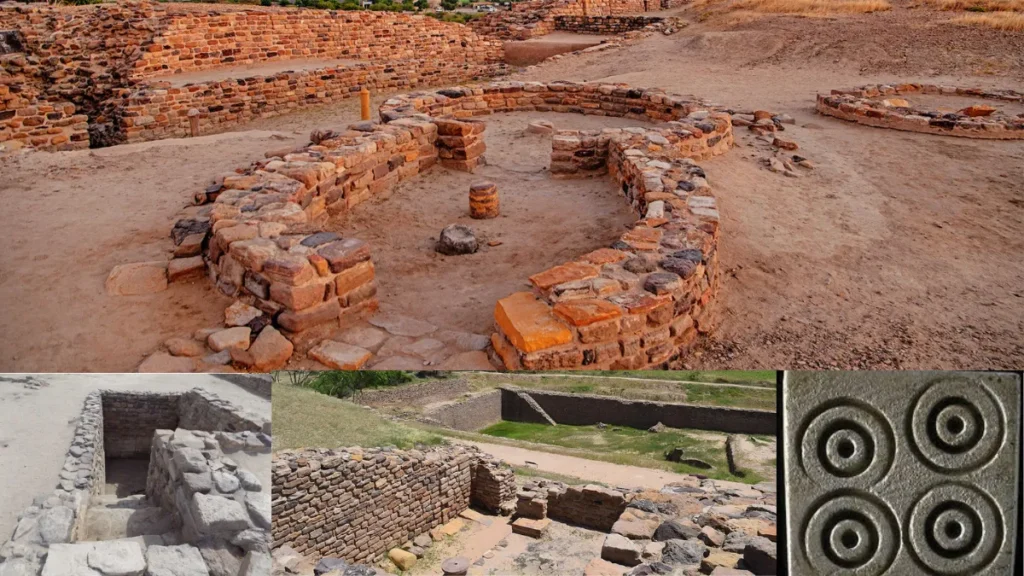
Dholavira history reveals the story of one of the most remarkable and well-planned ancient cities of the Indus Valley Civilization. Located in the present-day state of Gujarat, this archaeological site gives us deep insights into how people lived, built cities, managed water, and created advanced systems thousands of years ago. Dholavira stands as a symbol of human intelligence and urban planning during ancient times.
Introduction to Dholavira
Dholavira is an ancient city located on Khadir Bet island in the Rann of Kutch. It is one of the five largest Harappan sites and is considered one of the most important archaeological discoveries in India.
The city dates back to around 3000 BCE and continued to exist until about 1500 BCE. What makes Dholavira unique is its advanced urban planning, water conservation systems, and well-organized structure, which were far ahead of their time.
Discovery of Dholavira
The modern discovery of Dholavira happened in 1967 when it was first identified by archaeologist Jagat Pati Joshi. Later, extensive excavations were carried out by the Archaeological Survey of India under the leadership of R. S. Bisht in the 1990s.
These excavations revealed a highly sophisticated city with well-planned streets, massive walls, reservoirs, and unique architectural features. The findings changed our understanding of the Indus Valley Civilization and highlighted Dholavira as a major center of culture and trade.
Early Settlement Phase
Dholavira history begins around 3000 BCE when early settlers started living in the region. During this time, small communities developed basic structures and gradually expanded into a larger urban center.
Mature Harappan Phase
The peak of Dholavira came between 2600 BCE and 1900 BCE, known as the Mature Harappan Phase. During this period, the city reached its highest level of development. It had well-defined divisions such as the citadel, middle town, and lower town.
The city was surrounded by strong fortifications made of stone, which is rare among Harappan cities. Most other Indus cities used baked bricks, but Dholavira used stone extensively.
Decline Phase
After 1900 BCE, Dholavira started to decline. The reasons are believed to include climate change, drying of rivers, and reduced trade activities. Gradually, people left the city, and it was eventually abandoned.
Unique Urban Planning of Dholavira
One of the most fascinating aspects of Dholavira history is its advanced urban planning. The city was divided into three main parts: the citadel, the middle town, and the lower town.
The citadel was the most secure and important area, likely used by rulers or elite people. The middle town was for administrative and residential purposes, while the lower town housed the general population.
The city followed a grid pattern with straight roads and well-organized structures. Massive gateways, walls, and open spaces show that the city was carefully designed and constructed.
Advanced Water Management System
Water management is one of the most impressive features of Dholavira. Since the region is dry and receives limited rainfall, the people developed a highly efficient system to collect and store water.
They built large reservoirs, stepwells, and channels to collect rainwater and store it for long periods. Some reservoirs were carved out of rock, showing the engineering skills of the people.
This system ensured that the city had a steady supply of water even during dry seasons, which was essential for survival.
Architecture and Construction Techniques
Dholavira history also highlights unique construction methods. Unlike other Harappan cities that mainly used bricks, Dholavira used stone extensively.
The buildings were strong and durable, and many structures have survived thousands of years. The use of stone indicates that the builders had access to local materials and knew how to use them effectively.
The city also had large public spaces, which might have been used for gatherings, ceremonies, or trade activities.
The Signboard of Dholavira
One of the most exciting discoveries at Dholavira is a large signboard with symbols from the Indus script. This signboard is one of the earliest known examples of public writing in the world.
Although the script has not been fully decoded, it suggests that the people of Dholavira had a system of communication and possibly administration.
This discovery adds to the mystery and importance of Dholavira in understanding ancient civilizations.
Trade and Economy
Dholavira was an important trade center in ancient times. Its location near the Rann of Kutch made it a strategic point for trade routes connecting different regions.
People traded goods such as beads, pottery, jewelry, and possibly metals. The presence of workshops and artifacts suggests that the city had skilled craftsmen and a strong economy.
Trade played a key role in the growth and prosperity of Dholavira.
Culture and Daily Life
Life in Dholavira was well-organized and structured. The people lived in planned houses, followed a system of governance, and engaged in various occupations.
They made pottery, crafted ornaments, and used tools made of stone and metal. The presence of open spaces and large structures suggests that they also had social and cultural activities.
Although not much is known about their religion, some findings indicate that they might have followed nature-based beliefs.
Decline of Dholavira
The decline of Dholavira is still a subject of research. Many experts believe that climate change played a major role. The drying up of water sources and changes in rainfall patterns made it difficult for people to survive.
As trade reduced and resources became scarce, people gradually moved away. Over time, the city was abandoned and remained hidden for centuries.
Dholavira as a UNESCO World Heritage Site
In 2021, Dholavira was recognized as a UNESCO World Heritage Site. This recognition highlights its global importance as an archaeological and historical treasure.
It is now protected and preserved for future generations. Visitors from around the world come to explore this ancient city and learn about its rich history.
Importance of Dholavira Today
Dholavira history is not just about the past; it also teaches us valuable lessons for the present. The city’s water management system is especially relevant today, as many regions face water shortages.
It shows how ancient people used natural resources wisely and built sustainable systems. Modern cities can learn a lot from Dholavira’s planning and design.
How to Visit Dholavira
Dholavira is located about 250 km from Bhuj in Gujarat. The nearest airport is in Bhuj, and from there, visitors can travel by road.
The best time to visit is between October and March when the weather is pleasant. The site is open to tourists, and there is also a small museum that displays artifacts found during excavations.
Visitors can explore the ruins, reservoirs, and structures while enjoying the unique landscape of the Rann of Kutch.
Also read: Dholavira: Discover the Ancient Wonder of the Indus Valley Civilization
Conclusion
Dholavira history gives us a clear picture of how advanced ancient civilizations were. From urban planning to water management, the people of Dholavira showed remarkable skills and knowledge.
This ancient city is not just an archaeological site but a source of inspiration. It reminds us of the importance of sustainability, planning, and respect for nature.
As we continue to study and preserve Dholavira, it will keep revealing new secrets and helping us understand our past better.