
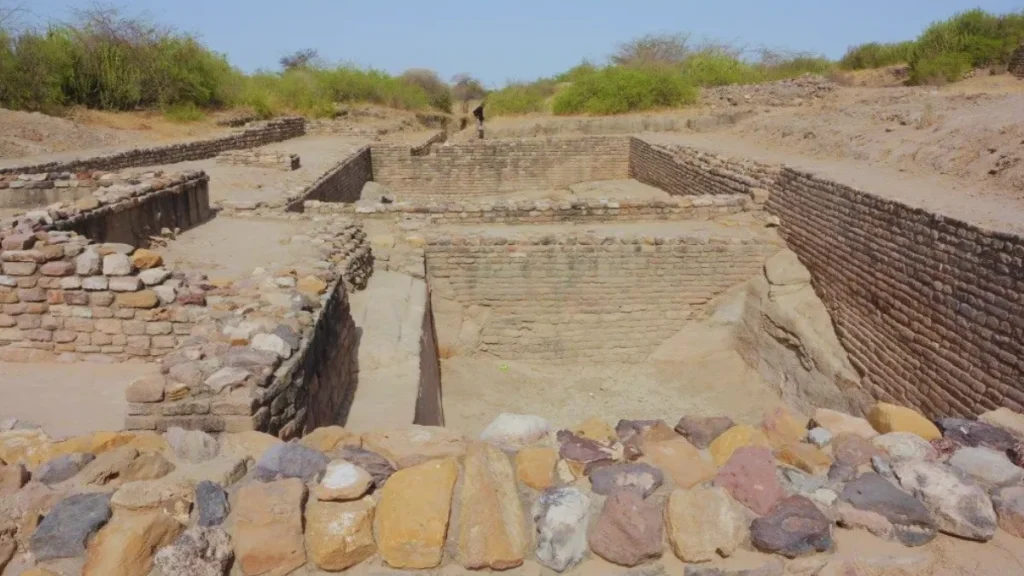
Dholavira is one of the most remarkable archaeological sites in India, offering a deep insight into the ancient Indus Valley Civilization and its advanced urban planning.
Introduction to Dholavira
Dholavira is an ancient city that dates back more than 4,500 years. Located in the Rann of Kutch in Gujarat, this historical site is one of the best-preserved urban settlements of the Indus Valley Civilization. It stands as a powerful example of how advanced and organized human societies were even in prehistoric times.
Dholavira is unique because of its sophisticated city planning, water management systems, and well-defined structures. Unlike many other ancient sites, it provides a clear understanding of how people lived, worked, and adapted to harsh environmental conditions.
Historical Background of Dholavira
Dholavira was discovered in 1967 by archaeologist Jagat Pati Joshi. However, extensive excavations began in the 1990s under the supervision of the Archaeological Survey of India. The site is believed to have been inhabited between 3000 BCE and 1500 BCE.
The city was a major center of the Indus Valley Civilization, also known as the Harappan Civilization. It played an important role in trade, culture, and administration. Evidence suggests that Dholavira had connections with other Harappan cities like Harappa and Mohenjo-daro, indicating a well-connected civilization.
Location and Geography of Dholavira
Dholavira is situated on Khadir Bet island in the Great Rann of Kutch. This area is known for its vast salt desert and extreme climatic conditions. Despite such challenges, the people of Dholavira managed to build a thriving city.
The location was strategically chosen between two seasonal streams, Mansar and Manhar. These water sources played a crucial role in the city’s survival, especially in a region where water is scarce.
Urban Planning and Architecture of Dholavira
One of the most fascinating aspects of Dholavira is its advanced urban planning. The city was divided into three main parts: the citadel, the middle town, and the lower town. Each section had its own purpose and was carefully designed.
The use of stone in construction sets Dholavira apart from other Harappan sites, where bricks were more commonly used. The buildings were strong, durable, and well-organized.
The streets were laid out in a grid pattern, showing a clear understanding of planning and design. Public spaces, residential areas, and administrative buildings were all separated logically.
Water Management System in Dholavira
Dholavira is especially famous for its innovative water management system. In a region where rainfall is limited, the inhabitants developed advanced techniques to collect and store water.
The city had a series of reservoirs, dams, and channels that captured rainwater and directed it into storage tanks. These reservoirs were built using stone and were designed to store large amounts of water for long periods.
This system ensured that the city had a reliable water supply throughout the year, which was essential for survival in the harsh desert environment.
The Great Reservoirs of Dholavira
The reservoirs of Dholavira are among the largest and most impressive features of the site. Some of them are massive and beautifully constructed, reflecting the engineering skills of the people.
These reservoirs were not only functional but also aesthetically pleasing. They show how the people of Dholavira valued both practicality and design.
The presence of such large water storage systems indicates that the city had a well-organized administration capable of managing resources efficiently.
The Signboard of Dholavira
One of the most exciting discoveries at Dholavira is a large signboard made of gypsum. It contains ten large symbols of the Indus script, making it one of the earliest known examples of writing.
Although the script has not yet been fully deciphered, this signboard suggests that Dholavira was an important center of communication and administration.
The size and prominence of the signboard indicate that it may have been placed at a public entrance or an important building.
Daily Life in Dholavira
Life in Dholavira was well-organized and structured. The people were engaged in various activities such as agriculture, trade, pottery, and craftsmanship.
Artifacts found at the site include beads, tools, ornaments, and pottery, which provide insight into their daily lives. The presence of workshops suggests that skilled artisans played an important role in the economy.
The society appears to have been peaceful and disciplined, with a strong focus on community living and cooperation.
Trade and Economy of Dholavira
Dholavira was an important trade center in ancient times. Its strategic location allowed it to connect with other regions, including Mesopotamia.
The discovery of marine shells, semi-precious stones, and other materials indicates that the city was involved in long-distance trade. Goods were likely transported through land routes and possibly through waterways during certain seasons.
Trade contributed significantly to the prosperity of Dholavira, making it a thriving economic hub.
Burial Practices in Dholavira
Unlike many other ancient civilizations, Dholavira shows unique burial practices. Interestingly, many graves found at the site do not contain human remains.
Instead, they contain symbolic objects, suggesting that the people may have followed different rituals or beliefs regarding death and the afterlife.
These practices continue to intrigue archaeologists and researchers, as they offer a glimpse into the spiritual life of the civilization.
Reasons Behind the Decline of Dholavira
The decline of Dholavira is still a subject of research and debate. However, several theories suggest possible reasons.
One major factor could be climate change, which may have led to reduced rainfall and water scarcity. This would have made it difficult for the city to sustain its population.
Another possible reason is the drying up of nearby water sources, which would have affected agriculture and daily life. Over time, these challenges may have forced the inhabitants to abandon the city.
Importance of Dholavira in Modern Times
Dholavira is not just an ancient site; it is a valuable source of knowledge about early human civilization. It helps historians and archaeologists understand how people lived, adapted, and innovated thousands of years ago.
In 2021, Dholavira was declared a UNESCO World Heritage Site, recognizing its global importance. This has increased its visibility and attracted tourists from around the world.
The site continues to be a subject of research, with new discoveries adding to our understanding of the past.
Best Time to Visit Dholavira
The best time to visit Dholavira is between October and March. During these months, the weather is pleasant and suitable for exploring the site.
Summers can be extremely hot in the Rann of Kutch, making it difficult for visitors to spend long hours outdoors. Winters, on the other hand, offer a comfortable experience.
How to Reach Dholavira
Dholavira is well connected by road. The nearest major city is Bhuj, which is around 220 kilometers away.
From Bhuj, visitors can hire taxis or use local transport to reach the site. The journey offers scenic views of the Rann of Kutch, making it an enjoyable experience.
The nearest airport is Bhuj Airport, and the nearest railway station is also located in Bhuj.
Travel Tips for Visiting Dholavira
When planning a trip to Dholavira, it is important to carry sufficient water and snacks, as facilities in the area are limited.
Wearing comfortable clothing and footwear is recommended, as exploring the site involves walking over uneven terrain.
It is also advisable to hire a local guide to better understand the history and significance of the site.
Nearby Attractions Around Dholavira
There are several interesting places to visit near Dholavira. The Rann of Kutch itself is a major attraction, known for its vast white desert and cultural festivals.
Visitors can also explore nearby villages to experience local culture, handicrafts, and traditional lifestyles.
The region offers a unique blend of history, nature, and culture, making it a perfect destination for travelers.
Also read: Dholavira History: Discover the Ancient City of the Indus Valley Civilization
Conclusion
Dholavira stands as a timeless reminder of human innovation and resilience. Its advanced planning, water management systems, and cultural richness make it one of the most important archaeological sites in the world.
Visiting Dholavira is not just a journey through history but also an opportunity to appreciate the brilliance of ancient civilizations. It teaches us valuable lessons about sustainability, resource management, and community living that are still relevant today.
Dholavira continues to inspire researchers, historians, and travelers alike, making it a must-visit destination for anyone interested in history and heritage.